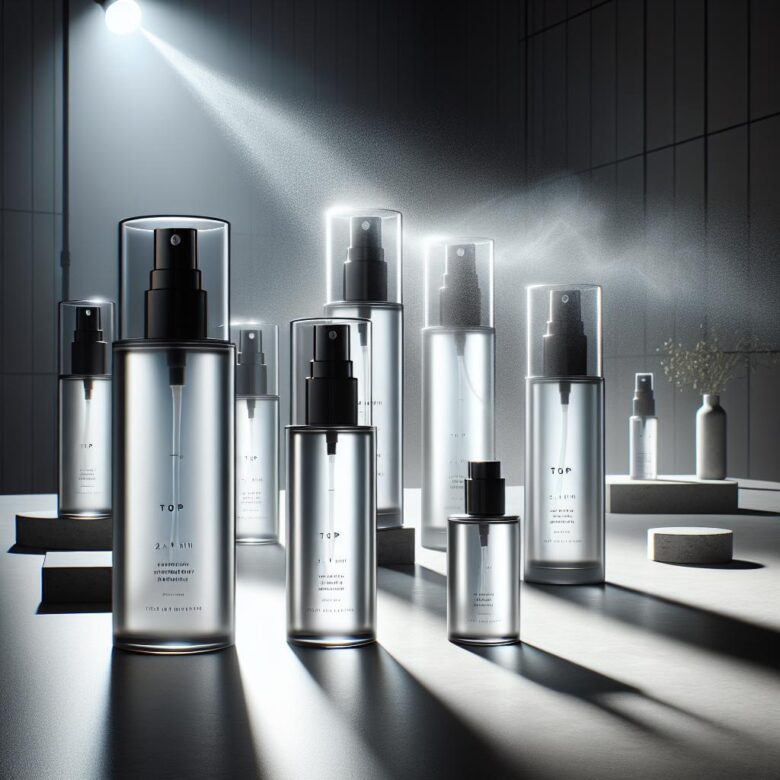
A setting spray may help makeup wear more evenly, but “waterproof,” “sweat-proof” and “transfer-proof” do not mean that foundation will survive every combination of humidity, skin oil, tears and friction. The products underneath—and contact with hands, phones, masks or collars—can still affect the result.
This comparison looks at four popular options through a narrower, more useful lens: what each manufacturer actually claims, the finish and spray format offered, and the trade-offs to consider before buying. The sprays were not personally worn or independently tested by Glow Theory, so the advertised wear times should not be read as head-to-head performance results.
How this comparison was evaluated
Glow Theory reviewed the manufacturers’ product descriptions and application directions for five practical criteria:
- Wear claim: the maximum duration advertised by the brand.
- Resistance language: whether the product is described as waterproof, water-resistant, sweat-proof, transfer-proof or smudge-proof.
- Finish: matte, natural or hydrating positioning.
- Delivery system: pump mist or aerosol.
- Potential limitations: fragrance, a strongly matte finish, format preferences and the absence of comparable independent testing.
No overall winner is named because a longer headline claim does not establish better real-world performance. Finish, comfort and compatibility with the rest of the makeup routine may be more important than the largest number.
Comparison at a glance
| Setting spray | Documented brand claims | Finish and format | Reason to consider it | Main trade-off |
|---|---|---|---|---|
| Urban Decay All Nighter Waterproof | Up to 24 hours; waterproof and smudge-proof | Natural finish; ultrafine pump mist | The longest advertised duration among these four, without intentionally matte positioning | The 24-hour figure is not independently verified, and individual wear can be much shorter |
| ONE/SIZE On ’Til Dawn | Up to 16 hours; waterproof, sweat-proof, transfer-proof and smudge-proof | Blurred matte finish; aerosol mist | The most explicit combination of resistance and matte claims in this comparison | A matte result may make dry areas more noticeable; some shoppers may prefer a non-aerosol pump |
| Charlotte Tilbury Airbrush Flawless | Up to 16 hours; waterproof; described as priming and setting makeup | Natural, hydrating positioning; pump spray; floral scent | A less matte direction for people concerned about a dry-looking finish | The disclosed scent may not suit people who avoid fragranced facial products |
| Skindinavia Bridal Formula | Up to 16 hours; long-wear and water-resistant | Fine pump mist; natural-finish event positioning | Instructions and marketing are specifically oriented toward weddings and photographed occasions | Water-resistant is not the same wording as waterproof, and bridal positioning does not prove flash performance |
The resistance terms above reproduce each manufacturer’s wording. Without a shared test protocol, it is not possible to conclude that one brand’s “waterproof” claim is stronger than another brand’s “water-resistant” claim.
How the four options differ
Urban Decay All Nighter Waterproof Makeup Setting Spray
Urban Decay describes All Nighter as a natural-finish spray with an ultrafine mist, waterproof and smudge-proof properties, and wear of up to 24 hours.
Who may want to investigate it: someone who wants a neutral finish and places value on the longest advertised duration in this group. The pump format may also appeal to shoppers who do not want an aerosol.
Who may prefer another direction: someone primarily looking for an explicitly matte finish or a product whose page specifically emphasizes sweat and transfer resistance. The 24-hour number should not outweigh a finish that is better suited to the wearer’s normal base.
ONE/SIZE On ’Til Dawn Mattifying Waterproof Setting Spray
ONE/SIZE describes On ’Til Dawn as an aerosol spray with a blurred matte finish and up to 16 hours of wear. Its product claims expressly include waterproof, sweat-proof, transfer-proof and smudge-proof performance.
Who may want to investigate it: someone building a matte, shine-control routine or prioritizing the broadest set of stated resistance claims among these four products.
Who may prefer another direction: someone whose foundation already catches on dry patches, who prefers a natural finish, or who does not want an aerosol. Matte positioning can be useful for shine, but it does not guarantee comfort or better wear on every oily complexion.
Charlotte Tilbury Airbrush Flawless Setting Spray
Charlotte Tilbury describes this spray as lightweight, hydrating and waterproof, with priming and setting uses and wear of up to 16 hours. The product page also discloses a fresh floral scent.
Who may want to investigate it: someone who wants extended-wear positioning but is trying to avoid an intentionally flat or strongly mattified finish.
Who may prefer another direction: someone who avoids fragranced facial products or wants explicit sweat-proof and transfer-proof wording. “Hydrating” is manufacturer positioning; it does not establish that the product will relieve dryness or suit reactive skin.
Skindinavia The Makeup Finishing Spray – Bridal Formula
Skindinavia presents its Bridal Formula as a water-resistant finishing spray for long, photographed occasions, with wear of up to 16 hours. Its directions call for shaking the bottle, holding it approximately 8 to 10 inches away and spraying in T and X patterns.
Who may want to investigate it: someone who prefers a pump mist and wants a product explicitly positioned around weddings or other long events.
Who may prefer another direction: someone specifically seeking matte oil control or stronger resistance wording. Event-oriented branding does not show how the product will photograph with a particular foundation, powder, sunscreen or lighting setup; only a trial of the complete routine can answer that.
A decision framework based on your routine
If controlling shine is the priority
ONE/SIZE is the most direct option to research because the manufacturer describes it as matte and makes explicit sweat and transfer claims. That is a specifications-based match, not proof that it will outperform the others on oily skin. Before buying, consider whether your foundation and powder already create enough matte coverage.
If dry-looking texture is the concern
Charlotte Tilbury’s hydrating positioning or the natural-finish descriptions from Urban Decay and Skindinavia may be more relevant than a mattifying aerosol. A spray cannot repair foundation that has already separated or caught on flaky skin. Adjusting skincare, powder and primer may matter more; see Glow Theory’s guide to choosing a hydrating primer for a longer-lasting base.
If the event involves heat, sweat or dancing
Compare the exact resistance language rather than duration alone. ONE/SIZE expressly uses sweat-proof and transfer-proof wording, while Urban Decay emphasizes waterproof and smudge-proof performance. Skindinavia says water-resistant rather than waterproof. These are still manufacturer claims, so trial the spray in conditions reasonably similar to the event.
If the makeup is for a wedding
Skindinavia’s bridal positioning may make it a logical product to investigate, but the event label alone is not a performance advantage. Test the spray with the exact skincare, sunscreen, foundation and powder planned for the day. Glow Theory’s step-by-step bridal makeup guide covers the wider routine and trial-run process.
If fragrance or reactivity is a concern
Do not choose solely from finish or wear claims. Review the current ingredient list on the package, particularly if there is a known reaction to a fragrance, preservative or botanical ingredient. Charlotte Tilbury expressly notes a floral scent, but the absence of a scent description on another product page does not by itself establish that the formula is fragrance-free.
What to verify before purchasing
- The exact product and variant: similarly named sprays can have different finishes or formulas.
- The current ingredient list: formulas can change, and retailer descriptions may not be as current as the package or official brand page.
- The resistance wording: waterproof, water-resistant, sweat-proof and transfer-proof should not be treated as interchangeable.
- The spray format: decide whether you prefer a manual pump or aerosol delivery system.
- The finish: consider how matte, natural or hydrating positioning will interact with the foundation and powder already in use.
- The directions: recommended distance, shaking and number or pattern of sprays can differ by product.
How to apply setting spray without destabilizing the base
- Let skincare and sunscreen settle. Spraying cannot stabilize complexion products applied over a base that is still slippery.
- Keep foundation layers controlled. Heavy product around the nose, jaw and mouth remains vulnerable to creasing and friction even after setting.
- Powder selectively. Concentrate on areas that normally crease or become shiny rather than automatically applying a thick layer everywhere.
- Follow the product’s directions. Shake when instructed and use the stated spray distance. A pump and an aerosol should not be assumed to work identically.
- Close the eyes and mouth and apply an even veil. Keep the container moving rather than saturating one area. If large droplets land on the face, the nozzle may be too close or partly blocked.
- Leave the surface alone until dry. Touching or wiping wet makeup can create more disruption than the mist itself.
More spray is not necessarily more effective. Oversaturating the face can re-wet foundation, produce spots or make the finish uncomfortable.
Run a useful trial before a long day
An at-home trial is not a laboratory test, but it can reveal whether the product works with your own routine. Test the complete combination rather than applying the spray over unfamiliar makeup.
- Use the same skincare, sunscreen, foundation, concealer and powder planned for the event.
- Photograph the makeup after it has dried in natural light and, if relevant, with the lighting or flash expected at the venue.
- Wear it through a representative part of the day instead of judging it immediately after application.
- Check the nose, chin, upper lip, under-eye area and any place touched by glasses or clothing.
- Press a clean tissue gently against the jawline. Do not rub, because rubbing creates a harsher transfer test than normal contact.
- Note comfort as well as appearance. Tightness, stinging or excessive dryness is not a worthwhile trade for a small improvement in hold.
- If the result is poor, change one variable on the next trial—such as powder amount or spray quantity—rather than rebuilding the entire routine at once.
Common problems and what to change
Large droplets or visible spots
Increase the distance, inspect the nozzle and keep the bottle moving. Allow droplets to dry before deciding whether a correction is necessary; wiping them while wet can remove foundation.
Foundation separates after spraying
Use less spray and allow liquid or cream layers more time to settle. Heavy makeup and a wet application can be a more important cause than the advertised finish of the spray.
The face feels dry or tight
Reduce powder and consider a natural or hydrating finish instead of a strongly matte formula. Stop using the product if the sensation appears to be irritation rather than ordinary dryness.
Makeup transfers to a collar or mask
Reduce foundation around contact points and set those areas lightly. No spray can eliminate the effect of repeated fabric pressure and rubbing in every situation.
Shine returns
Blot excess oil gently before adding powder. Applying another wet layer directly over visible oil may create an uneven surface and is not guaranteed to restore the original finish.
Safety and ingredient considerations
The U.S. Food and Drug Administration’s general cosmetic guidance advises consumers to read labels, use cosmetics as directed and stop using a product if a reaction occurs. That guidance does not endorse or assess the performance of any spray in this comparison.
Keep setting spray out of the eyes and mouth and avoid deliberately inhaling the mist. Use aerosol products only according to their label directions and with appropriate ventilation. Hairspray is not a substitute because it is formulated and labeled for hair rather than routine facial use.
Marketing descriptions such as “hydrating” or “for bridal makeup” do not replace an ingredient review. Consult a qualified healthcare professional when appropriate if a reaction develops or there is a history of significant cosmetic allergies.
Frequently asked questions
Can a setting spray make makeup completely transfer-proof?
No result can be assumed to eliminate all transfer. Oil, sweat, pressure and repeated rubbing can still lift complexion products. Transfer-proof is a brand performance claim, not a guarantee of zero pigment movement in every setting.
Should setting spray go before or after powder?
Follow the instructions for the specific product. Many sprays are used as the final step, while some brands also describe priming or layering applications. Adding extra layers without product-specific guidance may simply make the base wetter.
Does a 24-hour claim automatically beat a 16-hour claim?
No. The figures come from different brands rather than a common independent test. A 16-hour formula with a suitable finish may work better for a particular routine than a 24-hour formula that feels uncomfortable or interacts poorly with the base.
Is a facial mist the same as a setting spray?
Not necessarily. A facial mist may be intended primarily to refresh the skin, while a setting spray is marketed to extend or improve makeup wear. Check the stated purpose and directions rather than relying on the word “mist.”
Bottom line
Urban Decay has the longest advertised wear time in this four-product comparison. ONE/SIZE makes the clearest matte, sweat and transfer claims; Charlotte Tilbury takes a hydrating, scented direction; and Skindinavia is positioned specifically for long photographed events. Those distinctions can help create a shortlist, but they do not establish which spray will perform best on an individual face.
Prioritize the finish and format that suit your existing products, verify the current label and ingredient list, and trial the entire routine before relying on it for an important day.
Sources and editorial transparency
This is a source-based comparison prepared from manufacturer product pages and general FDA cosmetic-safety information. Glow Theory did not buy, wear, measure or laboratory-test these products, and it has not independently verified the wear or resistance claims. Product formulas, labels and directions can change.

Glow Theory publishes research-based makeup and beauty guidance. Product comparisons distinguish documented specifications and source-based research from hands-on testing. The publication does not present manufacturer claims as independent test results and does not claim professional or medical credentials that have not been verified.