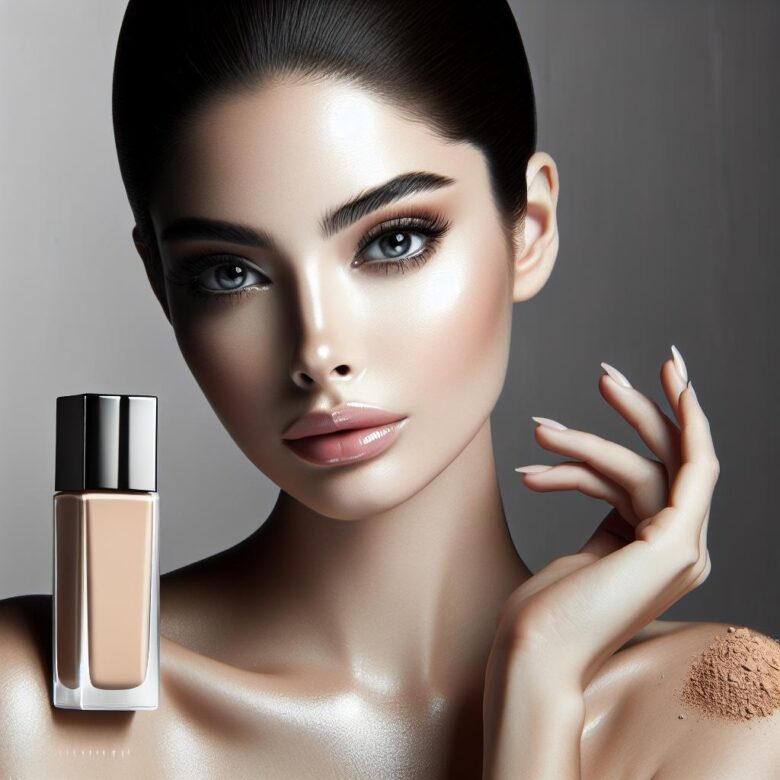
Mineral powder and liquid foundation can both create a natural, comfortable and long-lasting base. Neither format is automatically healthier, safer or better for every skin type.
The more useful comparison is how each formula behaves with your current skin condition, preferred coverage, climate, sunscreen, application method and daily routine.
What these two categories usually mean
Mineral powder foundation
This usually refers to a loose or pressed powder foundation built around powdered pigments and fillers. Common cosmetic pigments may include iron oxides, titanium dioxide or zinc oxide, but the exact formula varies.
Mineral foundation is often applied with a brush in thin layers. Coverage may range from sheer to fuller depending on pigment level, density and application.
Liquid foundation
Liquid foundation suspends pigments inside a fluid base that may contain water, silicones, emollients, film-forming ingredients, humectants or oils.
The category includes sheer skin tints, luminous foundations, flexible natural finishes and highly resistant matte products.
Liquid foundations also commonly use mineral-derived pigments, while a powder labeled as mineral may contain additional binders, preservatives, surface treatments or other cosmetic ingredients. Read the ingredient list and usage instructions instead of relying only on the name of the category.
Mineral powder vs. liquid foundation at a glance
On a phone, slide the table sideways to view all columns.
| Feature | Mineral powder foundation | Liquid foundation | What matters most |
|---|---|---|---|
| Coverage | Often sheer to medium and buildable, although highly pigmented powders may provide more | Available from very sheer to full coverage | How much correction you need and whether the product remains natural after layering |
| Finish | Frequently natural, satin or soft matte | Available in dewy, radiant, natural, satin and matte finishes | Your preferred appearance rather than the format alone |
| Dry areas | May cling when the skin is flaky or the powder is overapplied | A flexible or emollient formula may sit more comfortably on dryness | Skin preparation, formula texture and application amount |
| Visible shine | Powder format can provide an immediately less shiny appearance | Performance varies from oil-controlling matte to intentionally dewy | Finish, skincare underneath and oil production during the day |
| Touch-ups | Convenient when a compact or small brush can be carried safely | Usually repaired with blotting, concealer or a small amount of powder | Whether additional product builds smoothly over the original layer |
| Shade mixing | Loose powders can sometimes be mixed, but the process may be messy | Two liquid shades are generally easy to blend together | Undertone accuracy and how the shade looks after settling |
| Application speed | Can be quick for light everyday coverage | Can also be quick, especially with fingers, a sponge or one versatile brush | The amount of blending and correction your chosen formula requires |
| Travel | Pressed powder can be convenient; loose powder may spill | Liquids need secure packaging and may be subject to travel restrictions | Packaging quality and how the product will be transported |
| Hygiene | Brushes, puffs and compact surfaces require regular cleaning | Pumps reduce direct contact; open bottles and built-in applicators need careful use | Clean tools, clean hands and proper storage |
A quick decision guide
You prefer fast, light coverage
A pressed or loose mineral foundation may be a practical starting point, especially when you mainly want to even out tone and reduce visible shine.
You need greater coverage flexibility
Liquid foundation usually offers a wider range from sheer skin tint to full coverage, making it easier to match different occasions.
Your skin currently feels dry or flaky
Begin with a flexible liquid or very finely milled powder used sparingly. Do not assume powder must be avoided, but test it over your real skincare routine.
Your face becomes visibly shiny
A mineral powder or matte liquid may both work. Compare how each looks after several hours instead of judging only the immediate finish.
You dislike feeling foundation on the skin
Try a light mineral layer or a sheer liquid formula. Product amount often affects comfort more than whether the base began as powder or liquid.
You need makeup for a long photographed event
A long-wear liquid may provide more predictable uniformity, while mineral powder can remain useful for controlled setting and later touch-ups.
Strengths and limitations of each format
Mineral powder foundation
Powder foundation can create a lightweight, softly diffused appearance and allows the user to build coverage gradually.
Quick application, easy targeted touch-ups, less immediate surface shine and convenient pressed-powder packaging.
It can become visible around dryness, facial hair or texture when too much is buffed repeatedly into the skin.
Liquid foundation
Liquid formulas offer the broadest variety of finishes, coverage levels and wear characteristics.
Flexible shade mixing, smooth application over color differences and more options for radiant, moisturizing or resistant finishes.
A heavy layer can separate, collect around pores or feel uncomfortable, particularly when several skincare and primer layers remain slippery.
Choosing according to your current skin condition
Skin type is only a starting point. Skin can temporarily become dehydrated, irritated, oily or flaky because of climate, skincare changes or other factors.
A lightweight liquid with a natural or radiant finish may be easiest. Mineral powder can still work when applied sparingly over settled moisturizer.
Compare mineral powder with a matte or natural-finish liquid. Blot before adding more powder so oil and pigment do not form a thick layer.
Use one thin foundation across the face, then make regional adjustments. Set the T-zone while leaving drier cheeks with less powder.
Use the least amount that provides enough correction. Both liquid and powder can emphasize texture when coverage is repeatedly built over the same area.
Look for products labeled non-comedogenic, oil-free or “won’t clog pores,” and remove makeup before sleeping. The label does not guarantee compatibility for everyone.
Review the full ingredient list, avoid known triggers and test a new product on a limited area before using it across the face.
Neither category is automatically safer
Cosmetic reactions can be linked to ingredients found in powder or liquid products, including fragrance components, preservatives, dyes or metals.
- Do not assume that “mineral,” “natural,” “clean” or “hypoallergenic” means reaction-free.
- Compare ingredient lists when you already know that a particular ingredient causes discomfort.
- Stop using a product if it causes persistent itching, burning, swelling or redness.
- Seek qualified medical guidance for serious, recurring or worsening reactions.
- Do not use foundation to treat acne, rosacea, dermatitis or another skin condition.
What common label terms actually tell you
The product is presented as less likely to clog pores. It can be a useful filter for acne-prone skin, but individual results still vary.
The formula does not contain ingredients the brand classifies as oils. This does not automatically mean matte, non-irritating or suitable for every acne-prone user.
This is a manufacturer claim and does not guarantee that the product cannot cause an allergic reaction.
The term alone does not establish superior safety. Ingredients from natural and synthetic sources can both cause reactions in susceptible users.
The phrase does not explain the study size, method, participants or result. Look for additional details rather than treating it as a guarantee.
A foundation with an SPF claim should be used according to its label. Do not change or dilute the formula by mixing it with unrelated products.
How to apply mineral powder foundation
Loose or pressed mineral powder
- Complete skincare and sunscreen, then allow the surface to settle.
- Check that the skin is comfortable but not visibly wet or oily.
- Pick up a small amount with a clean, suitable brush.
- Tap away visible excess before touching the face.
- Apply a thin layer using gentle pressing, sweeping or controlled circular movements.
- Begin around the center of the face and blend toward the outer edges.
- Add more only to areas that still need coverage.
- Use a smaller brush for spots instead of repeatedly covering the full face.
Liquid foundation
- Allow skincare and sunscreen to settle before applying makeup.
- Shake or mix the foundation when the manufacturer instructs you to do so.
- Begin with a small amount rather than a complete pump automatically.
- Apply to the center of the face or areas with the most visible color difference.
- Blend outward with clean fingers, a sponge or an appropriate brush.
- Wait before adding a second thin layer.
- Use concealer for isolated marks instead of building full coverage everywhere.
- Set only the areas that crease or become shiny when powder is necessary.
Choose the application tool by the finish you want
Can create a lighter, more diffused mineral finish. Use small amounts and avoid aggressive pressure.
Can build more coverage from powder or liquid, but it may also deposit too much when heavily loaded.
Useful for pressing liquid foundation into the skin and softening visible edges or excess product.
Offers controlled placement but may require a final tapping step to soften visible lines.
Can spread sheer liquids quickly. Wash hands first and avoid repeatedly touching an open container.
Allows targeted coverage over redness or marks without increasing the thickness of the entire base.
You do not have to choose only one format
A mixed routine can combine the strengths of both products without layering them heavily.
- Apply a sheer liquid foundation where color correction is needed.
- Use mineral powder lightly through the T-zone for additional coverage and a less shiny finish.
- Use a liquid or cream concealer on isolated marks rather than building several powder layers.
- Carry pressed mineral powder for touch-ups after blotting visible oil.
A fair way to compare both formulas
A half-face comparison can be helpful, but only when the products offer similar shade depth and coverage. A full-coverage matte liquid cannot be fairly compared with a sheer luminous powder.
A controlled foundation wear test
- Choose one mineral powder and one liquid foundation with similar shade depth.
- Use your normal skincare and sunscreen across the entire face.
- Apply each formula to one side using the smallest effective amount.
- Use comparable coverage rather than forcing one side to become fuller.
- Check the match after the products have settled.
- Photograph the face in natural light, indoor light and with flash if relevant.
- Wear both sides through a normal day without repeatedly adding product.
- Blot each side in the same way when necessary.
- Compare the result before removing the makeup.
A foundation that shows a little shine but remains smooth may be more successful than one that stays matte while separating around the nose. Evaluate the complete appearance rather than one isolated feature.
Common problems and practical adjustments
Use less product, allow moisturizer to settle and switch to a softer brush. Avoid repeatedly buffing more powder onto the same dry area.
Reduce skincare and primer thickness, allow each layer to settle and apply the foundation in thinner sections.
Oil or moisture may change its appearance. Blot first and avoid adding more powder directly over visible oil.
Check the shade after it has settled and compare it in daylight. A different undertone or lighter layer may create a better match.
Use less product, reduce circular rubbing and press the final layer gently with a clean sponge or puff.
Do not keep covering them. Remove loose buildup locally, add a small amount of comfortable hydration if appropriate and reapply only a trace of makeup.
Use a small amount of concealer or foundation with a detail brush rather than adding another complete face layer.
Reduce the total number of skincare, primer, foundation, concealer and powder layers. Several thin products can still create a thick final result.
Removal and hygiene matter for both formats
- Remove foundation before sleeping, even when it is labeled non-comedogenic.
- Use a cleanser suitable for your skin and the resistance of the makeup.
- Do not scrub aggressively to remove long-wear foundation.
- Wash reusable brushes and sponges regularly and allow them to dry completely.
- Do not share makeup tools without appropriate sanitation.
- Keep containers closed and store them away from excessive heat or moisture.
- Discard products that develop an unexpected smell, color or texture.
Common mineral and liquid foundation myths
Individual ingredients and sensitivities matter more than the category name. A mineral powder can still contain an ingredient that causes discomfort for a particular user.
Liquid formulas vary widely. Acne-prone users can look for non-comedogenic or oil-free labeling and observe how the complete routine affects their skin.
A finely milled powder used in a light layer may work over properly settled skincare. Heavy application is more likely to emphasize dryness.
Liquids offer more full-coverage options, but some mineral powders are highly pigmented and buildable. The exact product matters.
Excessive pressure and repeated application can disturb skincare, emphasize texture and concentrate too much pigment.
Use sunscreen products according to their labels and do not assume that an unspecified amount of makeup provides the complete protection needed for every situation.
Frequently asked questions
Is mineral foundation better for acne-prone skin?
It may work well for some people, but it is not automatically better. Choose a formula labeled non-comedogenic or “won’t clog pores,” use clean tools and remove makeup before sleeping. Stop using any product that appears to worsen irritation or breakouts.
Which format provides the most natural finish?
Both can look natural when the shade is accurate and the layer is thin. Mineral powder can create a softly diffused finish, while a sheer liquid can resemble naturally even skin. Overapplication makes either option more visible.
Is liquid foundation better for mature-looking skin?
A flexible liquid may be easier around dryness and expression lines, but a light mineral powder can also work. Avoid heavy layers and use powder selectively instead of assuming the entire face must be fully set.
Can mineral foundation provide full coverage?
Some formulas can build to fuller coverage, but several powder layers may become visible. Targeted concealer is often more natural than repeatedly adding powder across the complete face.
Which lasts longer in hot or humid weather?
Performance depends on the specific formula, skincare, sweat, oil production and application. A resistant liquid may stay more uniform, while mineral powder may be easier to blot and repair. Test both under realistic conditions.
Can I apply mineral powder over liquid foundation?
Yes, when the products are compatible and the powder is used lightly. Apply it only where additional coverage or shine control is needed rather than building two full foundation layers.
Should foundation match the face or neck?
Test the shade where the face, jaw and neck can be viewed together. The goal is a believable transition rather than matching one small area that may have temporary redness or discoloration.
How can I avoid wasting money on the wrong formula?
Use a sample when available, test it over your normal sunscreen and observe it for several hours. Check shade, comfort, texture and removal before buying a backup or another finish.
The practical conclusion
Mineral powder is a strong choice when you value quick application, gradual coverage, a softly matte appearance and convenient touch-ups. Liquid foundation is often more suitable when you want a wider range of finishes, easier shade mixing or stronger coverage flexibility.
Dry or texture-prone skin may find a flexible liquid easier, while shine-prone users may enjoy mineral powder or a matte liquid. Acne-prone and sensitive skin should be evaluated by the complete formula, not by the category name.
The best way to decide is to compare realistic amounts over the same skincare and sunscreen. Choose the foundation that remains comfortable, looks believable in natural light and fades evenly during the number of hours you actually need.
Editorial transparency: This guide was prepared by the Glow Theory Editorial Team for general educational purposes. It does not claim that mineral powder or liquid foundation is universally safer, healthier or more appropriate for a medical skin condition. Product formulas, labels and instructions vary and may change.
Sources and safety references
- U.S. FDA — Makeup and cosmetic regulation
- U.S. FDA — Using cosmetics safely
- U.S. FDA — Allergens in cosmetics
- U.S. FDA — Cosmetic labeling claims
- American Academy of Dermatology — Makeup tips for acne-prone skin
- American Academy of Dermatology — Skin-care habits that can worsen acne
- U.S. FDA — Sunscreen and sun-safety guidance

The Glow Theory Editorial Team creates practical, carefully researched content about makeup techniques, beauty tools, skincare-friendly products and routines for everyday life and special occasions. Each guide is reviewed for clarity, accuracy and usefulness, helping readers make informed beauty choices without unrealistic promises.